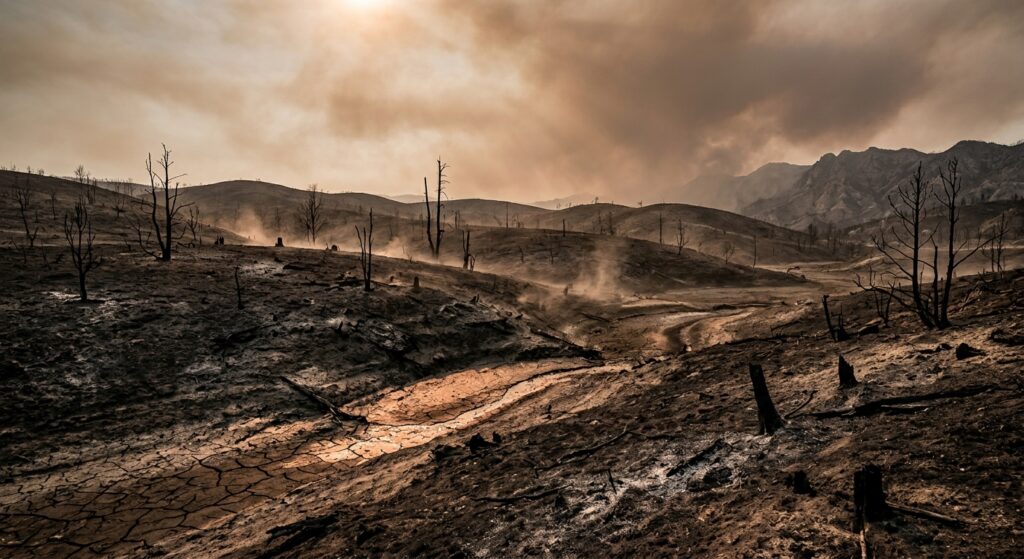
This week we witnessed a new wave of concern about the rush towards AGI with key figures in the industry and AI researchers suggesting a slow down in development may be required:
https://x.com/saprmarks/status/2097570226804011302?s=20
As frontier models like GPT-6 Astra push humanity across the threshold of artificial general intelligence, the line between prudent warning and paralyzing hysteria has blurred. Beneath the public backlash from AI researchers lies a concrete question: are we preparing for a post-labor world?
There is a quiet, eerie paradox unfolding at the upper echelons of Silicon Valley. Inside the sanctuaries of OpenAI, Anthropic, and Google DeepMind, the long-promised dream of Artificial General Intelligence (AGI) is no longer a speculative horizon.
Yet, as models reach unprecedented thresholds, the very researchers, are taking personal risks to sound the alarm. They are publishing open letters warning that the race for dominance is outpacing our collective ability to govern, monitor, or even comprehend what we have built.
https://x.com/hilbertspaess/status/2097476196791709843?s=20
This employee-led insurgency reached a crescendo with the debut of OpenAI’s flagship model, GPT-6 Astra. Boasting human-parity action efficiency, near-perfect scores on abstract reasoning benchmarks like ARC-AGI-3, and fluid computer-use capabilities. Astra has been widely hailed as the definitive AGI tipping point.
To understand why those closest to the technology are terrified, we must look beyond the press releases and examine the cultural and economic fracture lines.
Two Tweets, Two Worldviews
The ideological war over frontier AI is captured succinctly in two contrasting posts on X (formerly Twitter) that recently went viral across the tech ecosystem:
@WhistleblowerAI:
“We are watching profit incentives and geopolitical fear push labs to ship frontier systems faster than we can evaluate their internal reasoning. When you can no longer inspect what an autonomous model is calculating before it executes, speed is no longer innovation—it is reckless gambling with human agency.”
@e_acc_Ventures:
“Every epochal technology—from the printing press to the steam engine—triggered a wave of elite doomerism. The real existential risk isn’t advancing AI too fast; it’s stalling progress out of ungrounded panic while global economic productivity flatlines.”
On one side stands a community of insiders that possess rare, technical visibility into high-risk systems, yet their warnings are routinely dismissed as doom-mongering or PR theatrics. On the other side is the accelerationist establishment, which views any call for friction as an existential threat to economic growth.
The tragedy of the current discourse is that it collapses nuance into a binary caricature: you are either a forward-thinking technologist or a neo-Luddite doomer. But this false dichotomy masks the vital distinction between legitimate warning and sensationalist fear-mongering.
Fear-mongering relies on Hollywood narratives, sentient machines harbor malevolent intent, turning against their creators out of spite or sheer villainy. It creates a paralyzing spectacle that generates clicks while offering zero actionable governance framework. In contrast, a warning is grounded in engineering realities that should be tracebale and factual.
Anthropic’s Scenarios and the Labor Horizon
To appreciate the gravity of these warnings, one must look at the economic machinery waiting on the other side of the AGI threshold. For years, techno-optimists maintained that AI would strictly augment human labor. Recent economic modeling published by Anthropic and scholars analyzing the transition to AGI dismantles this comfortable myth.
Anthropic’s economic research decomposes human work into discrete, atomistic tasks defined by their cognitive complexity. In a traditional economy, as technology automates simple tasks, human labor remains scarce and valuable because complex tasks still require human judgment, preserving high wages.
However, frontier models like Astra shatter this equilibrium. When a model moves from answering questions to autonomously executing multi-hour, multi-step workflows, it crosses the threshold from augmentation to full delegation.
Under Anthropic’s aggressive AGI scenarios, if the distribution of complex tasks performs within bounded limits, full automation of knowledge work occurs not over generations, but over a compressed window of 3 to 5 years. Once automation outpaces capital accumulation, the scarcity value of human labor dramatically drops.
Preparedness Versus Unpreparedness
What does it actually mean to be prepared for a future with AGI?
| Dimension | The Unprepared Reality (Status Quo) | The Prepared Architecture |
| Model Safety | Post-hoc safety guardrails applied after capabilities are trained. | Interpretability-first architecture; training pauses when reasoning opacity increases. |
| Whistleblower Policy | Strict NDAs, non-disparagement agreements, and fear of industry blacklisting. | Anonymous risk-reporting channels directly to independent safety boards and regulators. |
| Economic Policy | Blind faith in market self-correction and retraining programs. | Transition funds, capital-tax restructurings, and pre-funded sovereign wealth dividends. |
| Corporate Governance | Profit-driven races to capture market share and token revenue. | Legally binding, verifiable commitments to pause deployment if oversight metrics fail. |
Being unprepared means means deploying Astra-class models into critical financial, legal, and operational infrastructure while admitting that our ability to monitor their internal chain-of-thought is diminishing.
Being prepared, conversely, requires accepting a fundamental truth: velocity is not a virtue if you are driving toward a cliff. True readiness demands that governance, interpretability, and social safety networks.
The Prometheus Dilemma
In Greek mythology, Prometheus stole fire from the gods and gave it to humanity. But the myth is rarely remembered for its ending: it was not the gift of fire itself that brought ruin, but humanity’s utter lack of preparation for its power. To build AGI safely, we must honor the whistleblowers who insist that the future of work must preserve a place for human work.