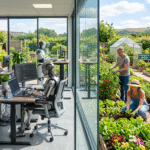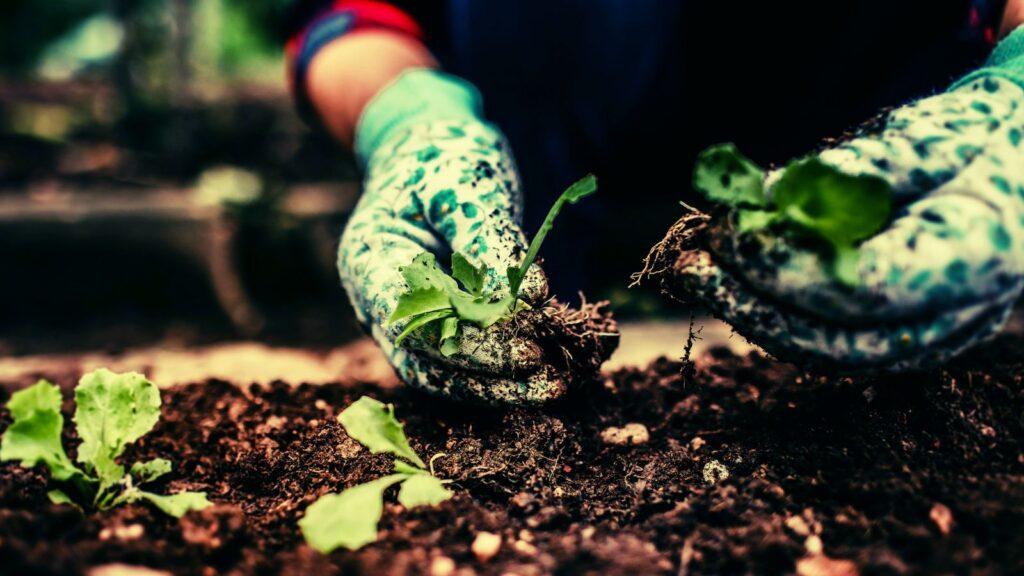
Before the algorithmic hum of the 2026 office became my daily soundtrack, I was a forager. My days were measured not in generative outputs, but in the damp earth packed under my fingernails, the satisfying, tactile snap of a wild stem, and the deep, somatic rhythm of tracking the seasons. The forest did not optimize for speed; it optimized for balance. To succeed there required a profound, sensory engagement with the physical world.
Today, with the entire corporate landscape consumed by artificial intelligence, I find myself thinking about the woods constantly. The utopian promises of the generative AI revolution, slashed workloads, effortless productivity, a frictionless existence, have collided violently with human biology. Instead of a utopia, we are experiencing an unprecedented crisis of work. We are discovering, quite painfully, that a frictionless world is an uninhabitable one.
The sudden, radical urge sweeping through the modern workforce, the quiet desperation to log off, get our hands dirty, knit, bake, build, and grow, is not a fleeting lifestyle trend. As researchers in psychology and evolutionary biology are beginning to note, our craving to make things by hand is a biological imperative. It is the human animal rebelling against the abstract.
the Infinite Workday
The biggest challenge of the 2026 workplace is no longer is psychological survival. The relentless integration of AI into our daily workflows has intensified our cognitive strain. We are trapped in what organizational psychologists now call the infinite workday, a perpetual state of managing micro-tasks, auditing algorithmic hallucinations, and wrestling with the restless micromanager that our AI co-pilots have become.
Our mental fitness is fraying because our brains are being starved of physical connections. When an electrician wires a house or a forager harvests wild mushrooms, the feedback loop is immediate, tangible, and undeniably real. In contrast, the modern knowledge worker operates in a void. We suffer from a somatic disconnection, leading to cognitive atrophy. The brain, denied of physical friction, begins to exhaust itself with multiple screens.
This biological exhaustion explains the most fascinating labor shift of our time: the tech-to-trades exodus. Burned-out knowledge workers are not simply seeking job security; they are desperately trying to reclaim the psychological satisfaction of making something exist in the physical world.
We are physically and neurologically designed to manipulate our environment. When the output of our labor is reduced to keystrokes, we lose the anchor of our own humanity.
the New Artisan
Speed is the enemy of craftsmanship, and AI has made speed entirely frictionless. The inevitable result is a deluge of fast, low-quality, synthesized deliverables that look finished but demand hours of hidden human cleanup. It is a massive drain on net productivity, polluting the corporate ecosystem with infinite, meaningless content.
In this environment of synthetic overabundance, true value is quietly reverting to the painstaking and the physical. Craftsmanship requires time, friction, and the inevitability of human error. We dream of making things by hand because the very act of struggling with a material is what imbues the final product with worth.
Consequently, the scramble to hire technical prodigies is cooling. The most valuable workers of 2026 are the process pros. These systems thinkers do not just optimize individual tasks; they understand the holistic architecture of a business. Just as a forager must understand the intricate, overlapping ecosystems of a forest to locate a single patch of chanterelles, the systems thinker applies grounded, contextual intelligence to dismantle broken workflows. They possess the spatial awareness that AI entirely lacks.
Reclaiming Truth
As the digital realm becomes increasingly synthetic, trust has fundamentally eroded. The hiring process has been hopelessly gamified by candidates deploying advanced AI to generate deepfake resumes and synthesize perfect interview answers. Simultaneously, corporate espionage has shifted from the realm of state-sponsored hackers to the payroll itself, as generative tools make it remarkably easy for internal actors to exfiltrate proprietary data.
How does an organization survive when the digital world can no longer be trusted? By returning to the physical. Employers are actively reversing the candidate fraud arms race by abandoning the digital void altogether. They are reviving in-person interviews and experiential, real-time skills assessments. They are rediscovering the truth that a person’s capability, integrity, and worth must be felt, seen, and experienced in a shared physical space.
This crisis of authenticity extends to the very identity of the worker. High-performing employees are now routinely training digital doppelgangers, AI avatars adept at mimicking their specific habits, communication styles, and problem-solving methods.
The deepest hidden cost of our technological acceleration is the alienation from our own nature. We are a species built to interact with the earth. Organizations that will truly thrive are not those who digitize every waking second. They will be the ones who recognize that our highest, most irreplaceable value lies in the friction, the dirt, and the beautiful, physical reality that a machine can never touch.
Don’t forget to Save for Later