For more than a century, social theorists and economists shared a singular anxiety: that technological progress would render human labor obsolete, leaving millions without work. Today, a vastly different and more disruptive reality is taking shape across the developed world. The central crisis facing modern economies is not a scarcity of jobs, but a scarcity of people.
According to recent labor studies by the OECD, OECD economies find themselves at a historic crossroads. Unprecedentedly high employment rates are masking a profound, structural shift beneath the surface: as birth rates plummet and longevity increases, the working-age population across developed nations is contracting. The global economy is entering a era of chronic labor shortages.
Yet the most alarming feature of this demographic crunch is not merely a reduction in headcounts, it is the rapid widening of a skills gap that threatens the vital organs of civic society, beginning with our education systems.
Empty Classrooms, Vanishing Teachers
It is a bitter irony of the demographic transition that falling birth rates do not make educating a society any easier. On paper, fewer children should mean less strain on schools. In practice, population aging creates a perfect storm within the education workforce.
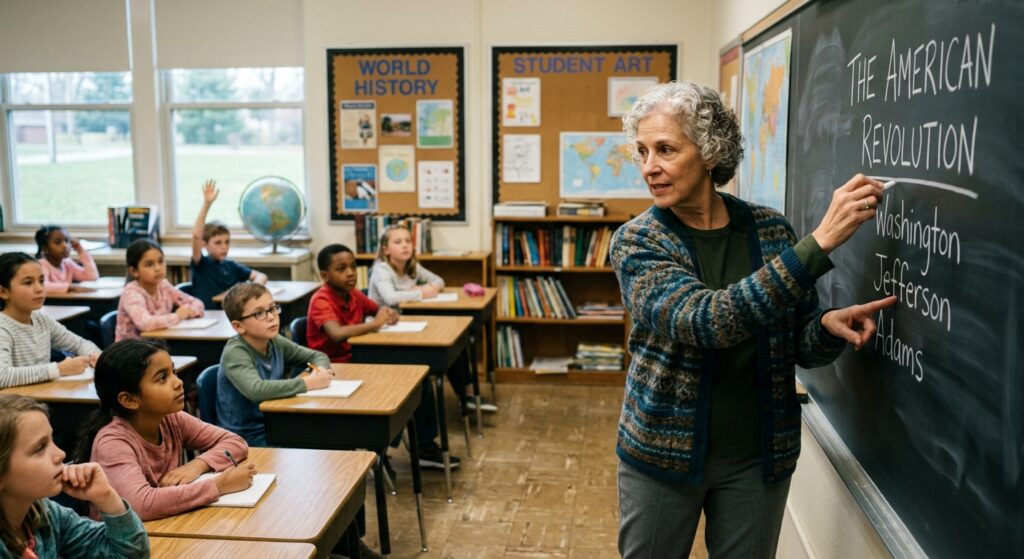
In many OECD countries, the teaching profession is severely top-heavy. A massive cohort of veteran educators, who possess decades of institutional wisdom, pedagogy, and specialized subject knowledge, is reaching retirement age all at once. Because the youth population is shrinking, the incoming graduate pipeline is simultaneously drying up. Fewer young adults are entering teacher preparation programs, creating persistent recruitment shortfalls in critical fields like mathematics, hard sciences, and special education.
Compounding this pipeline crisis is an insidious fiscal squeeze. As the ratio of retirees to active workers rises, governments face skyrocketing non-negotiable costs for pensions, chronic health management, and eldercare. In public budgets, these entitlement commitments inevitably compete with education funding. Schools are left with stagnant operating budgets, making it difficult to raise teacher salaries or modernize facilities precisely when they need to attract fresh talent.
Perhaps most fundamentally, population aging creates an architectural mismatch. Traditional education systems were built around a linear, youth-centric model: educate the young for 20 years, then release them into a 40-year career. But in an aging society undergoing rapid technological change, adults in their 40s, 50s, and 60s must constantly reskill to remain productive. Public education systems are ill-equipped to pivot funding and faculty toward lifelong, mid-career training.
Cascading Vulnerabilities
The demographic drain on education is not an isolated crisis; it is part of a broader, systemic failure of workforce renewal across several essential industries.
1. Healthcare and Long-Term Care: The Epicenter of Demand
While the need for teachers remains steady or contracts slightly, the demand for healthcare workers is exploding. Older populations require significantly more complex, long-term medical care. However, doctors, nurses, and care aides are aging at roughly the same rate as the general population. Burnout, physical strain, and early retirements are depleting the care workforce just as patient loads reach historical peaks, creating acute wage inflation and care deficits.
2. Construction, Manufacturing, and Physical Trades
Roughly 40% of workers in advanced economies perform jobs that demand significant physical stamina—from carpentry and electrical wiring to factory line operating and heavy transport. As these workers age, chronic pain and physical exhaustion force early departures. Unlike cognitive professions, physical trades cannot easily be extended past conventional retirement ages without radical workplace redesigns or robotic assistance. The result is a disappearing class of master craftspeople with few apprentices to inherit their skills.
3. Public Administration and Infrastructure
Civil service departments, municipal infrastructure management, and public utilities rely heavily on senior workers who understand the intricate mechanics of public infrastructure. As these workers retire, governments face administrative bottlenecks, slower permitting processes, and delayed infrastructure maintenance—stifling overall economic dynamism.
Beyond the Three-Stage Life
For the past century, industrial societies organized human life into three neat, sequential boxes: Education, Work, and Retirement. The demographic transition renders this model obsolete.
To prevent widespread economic stagnation and institutional decay, societies must pioneer a multi-stage life model. This transition requires three fundamental transformations:
- Unbundling Education: Higher education institutions must shift from four-year degree factories for teenagers into flexible, modular skill centers that workers re-enter every decade throughout a 50-year career.
- Ergonomic and Technological Augmentation: Instead of viewing AI and robotics solely as tools for labor replacement, industries with physical shortages—such as construction and caregiving—must deploy technology to reduce physical wear and tear on older workers, extending their healthy working years.
- Knowledge-Transfer Frameworks: Organizations must formalize phased retirement models, allowing veteran professionals to transition into part-time mentoring and instructional roles rather than abruptly exiting the labor force with their institutional memory intact.
The aging population is not an insurmountable catastrophe, but it is an unyielding reality. The nations that flourish in the coming decades will not be those that attempt to restore 20th-century demographics, but those that fundamentally revalue, retrain, and redesign the lifespan of their human workforce.