How can we Reclaim Seasonal Adaptability in the Future of Work?
In the quiet hush of a July morning, long before the hum of Slack notifications or the flicker of calendar invites begins, one might wonder: Could we work differently, seasonly and even playfully?
As global society grapples with a reshuffling of its work paradigms, remote versus hybrid, four-day weeks, AI-integrated workflows we find ourselves at a threshold not merely technological, but anthropological. The future of work is often framed in terms of efficiency or disruption, but what if the answers lie not ahead, but far behind us, among people who never worked in the modern sense at all?
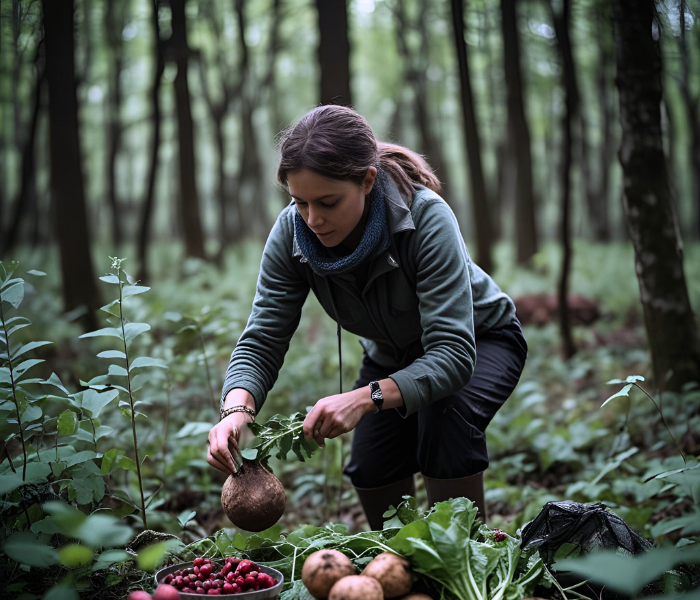
Cecilia Padilla-Iglesias’s rich portrait of the BaYaka foragers in Central Africa peaked my curiosity, not only because I once considered myself a forager of some kind but also because it is a provocative entry point into this deeper history of social organisation. Their seasonal reorganizations, shifting dwellings, dissolving hierarchies and changing rituals reveal a mode of living that resists the rigid, mechanized rhythms of industrial capitalism. For the BaYaka, adaptability isn’t a concession; it is culture.
In contrast, many of us live in systems that reward consistency, productivity, and predictability. These are the cornerstones of industrial time: the 9-to-5, the fiscal quarter, the “year-end review.” But what if these constructs are historically anomalous? What if our species, for most of its 300,000-year history, flourished not because of structure but because of fluidity?
Today, echoes of that flexibility are re-emerging in the global shift toward decentralized and freelance work. As of 2025, nearly 50% of Gen Z and Millennials in the U.S. participate in the freelance economy, according to data from Upwork and the Freelancers Union. Globally, the freelance workforce is expected to surpass 1.5 billion people by the end of this decade. But this isn’t merely about side gigs. Increasingly, work is becoming project-based, fluid, and cooperative, less about linear careers and more about cycles of contribution.
Digital nomads, remote contractors, DAO contributors, open-source developers all form ad hoc communities that come together for a season, a sprint, a shared goal. Then, they dissolve, regroup, and reconfigure. In this, we find a surprising mirror to the BaYaka’s seasonal dispersals or the ritual rhythms of the Nambikwara in the Amazon.
The pandemic accelerated this trend. In 2020 alone, the number of remote workers increased by over 600% globally. What followed was social decentralization. Tools like Notion, Discord, MeWe and GitHub have enabled the rise of networked guilds and collaborative communities, not unlike ancient seasonal gatherings that erected massive monuments and then quietly returned to the forest.
This shift isn’t trivial. It questions deeply held assumptions about hierarchy, permanence, and authority. Community-driven projects now thrive not through centralized control, but through shared purpose and fluid leadership. A single project may be led to success by dozens of contributors from six continents, each person accountable not to a manager, but to the momentum of collective intent.
We might call this seasonal flexibility. It suggests more than changing routines. It implies metamorphosis: a deliberate, communal reconfiguring of roles, rituals, and even values in response to time’s cycles.
This is not about romanticizing the forager’s life, nor naively grafting ancestral rhythms onto today’s market logic. It is about recognizing the wide latitude of human design. As David Graeber and David Wengrow wrote in The Dawn of Everything, we are a species not of fixed stages but of political experimentation. Hierarchy was never destiny.
Even now, many decentralized organizations operate under principles that would seem radical to a traditional firm. Decision-making is shared. Contributions are reputation-based. Roles are fluid, and exit is easy. These systems, while still nascent, recall the seasonal reversals of power seen among the Kwakwa̱ka̱ʼwakw, where hierarchies peaked and dissolved in predictable cycles.
Imagine, then, a workplace that mimics the lunar phases, not the fiscal calendar. Leadership rotates not annually, but rhythmically. Projects bloom and hibernate. Contributors flow in and out like tides, bound not by contracts, but by mutual intent. This is not utopia; it is a rediscovery.
Flexibility is not merely a productivity hack. It is a cognitive and cultural muscle. It requires unlearning the rigid schemas of “normal” work and embracing the idea that the best systems may be those we can dismantle and rebuild. Much like the BaYaka, who remake not just homes but hierarchies with the rains, we too might find that the key to enduring complexity is permitting ourselves to change shape.
There are real challenges to this model. Capital markets demand consistency. Algorithms crave predictability. But humans do not. And perhaps, as we inch closer to ecological thresholds and mental health tipping points, it is this discrepancy that signals the need for a new cultural contract.
In the end, the lesson is not just anthropological but deeply hopeful. Human societies are not locked into a single mode. We are not defined by cubicles, timesheets, or even KPIs. We are, by nature, cyclic. Adaptive. Capable of designing social orders as varied as the seasons themselves.
If we can reclaim that inheritance and if we can remember what it means to live and work as seasonal creatures then the future of work may not be a continuation of the past but a return to our most creative, fluid selves.
And perhaps then, when someone asks us not where we live or how we work, but who we are, we too might smile and answer: “Wet season or dry?”