Ride-hailing platforms alone employ approximately 9.9 million drivers. This is a critical source of income globally. With the low barrier to entry it makes it one of the key areas of work that is accessible to most. However, the world of driving is changing dramatically. In China 85% of consumers comfortable with unsupervised driving. By 2035, China is projected to outpace all other markets in AV adoption, leading the global robotaxi landscape with eight companies offering public services.
For more than a century, the view from the backseat of a commercial vehicle has remained consistent. It is a view framed by the back of a human neck. To sit in a taxi is to enter a temporary, unspoken social contract with a stranger whose livelihood depends on spatial negotiation, emotional labor, and split-second physical intuition.
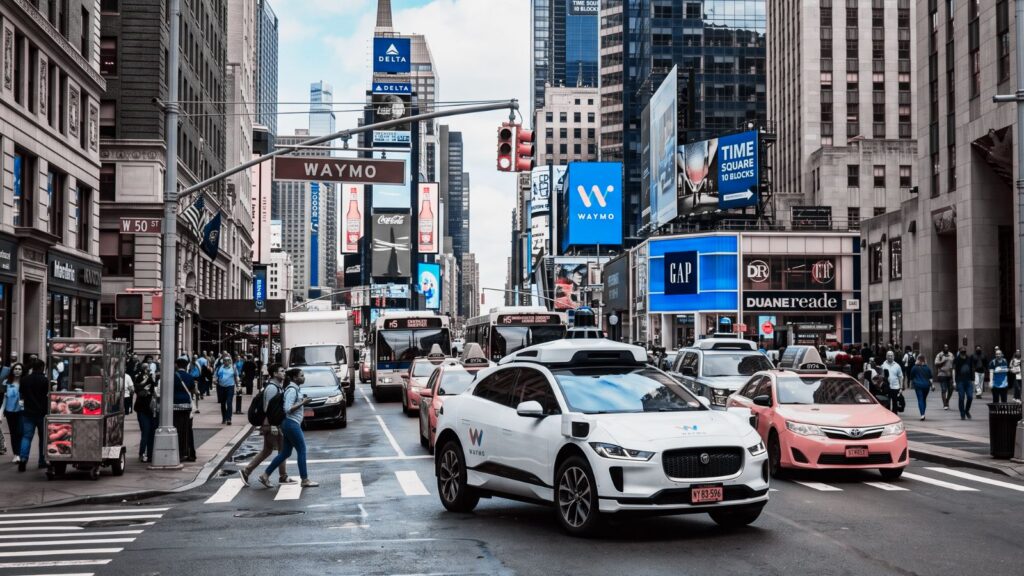
But a quiet eviction is underway. Across major urban testbeds, from Phoenix to San Francisco and now Atlanta, the front seats of hailable cars are increasingly empty. The transition to large driving networks trained on massive fleets of real-world footage has allowed autonomous vehicles to master the messy, anomalies of city traffic that used to baffle earlier software architectures.
As regulatory frameworks accelerate this commercial push, we are forced to confront a deeper philosophical and economic shift. The transformation of taxi work is not merely a story of technological displacement; it is the systematic dismantling of a foundational urban subculture.
The Human Balance Sheet
To map the true scale of this disruption, one must look at the staggering volume of humanity currently behind the wheel. In the United States alone, the gig economy has turned personal vehicles into primary and secondary safety nets. Uber alone commands roughly 1 million active drivers in the U.S., anchoring a broader rideshare ecosystem where millions of Americans rotate in and out of active status depending on economic need.
When combined with traditional taxi medallions, limo chauffeurs, and regional transit drivers, millions of American households rely directly on the steering wheel as an immediate wealth-generating tool.
U.S. Workforce Exposure at a Glance:
- 1 million active Uber Drivers
- 4.5 million jobs in Transport/Logistics Sector
- $168 Billion in annual wages
The macro-projections are stark. Economic reviews on comprehensive vehicle automation estimate that full adoption could ultimately displace up to 4.5 million jobs across the broader U.S. transportation and logistics sectors, wiping out an estimated $168 billion in annual wages. While autonomous vehicle deployment promises over $936 billion in annual societal gains those dividends are heavily centralized. The corporate balance sheet clears its labor liabilities, but the public balance sheet inherits a displaced workforce.
The Myth of the Automated Vacuum
The standard corporate narrative surrounding robotaxis promises absolute friction-less utility: a safer, cheaper, and more efficient network that effortlessly wipes away human error and labor costs. Yet, economic and operational realities suggest a stranger, more fragmented transition.
Recent operational modeling indicates that while autonomous fleets do reduce baseline operating costs compared to traditional ride-hailing, they do not entirely erase human labor. Instead, labor is being re-routed behind the scenes. Autonomous vehicle deployment reveals a hidden ecosystem of frontline workers:
- Remote Teleoperators: Human spotters sitting in simulator cockpits miles away, waiting to bail out an algorithmic logic loop when a car encounters an unmapped construction zone.
- Depot Technicians & Cleaners: Fleet mechanics, sensor calibrators, and detailing crews who must manually scrub away the physical realities left behind by untethered passengers.
What this represents is less a triumph of pure artificial intelligence and more a structural migration of labor. The autonomous vehicle does not exist in a vacuum; it requires a highly centralized, industrial support apparatus. However, for the worker, the nature of this employment is radically transformed.
The Loss of the Urban Vernacular
Historically, commercial driving has functioned as an economic safety net a low-barrier entry point into the urban economy, particularly for immigrant and working-class populations. It is an occupation defined by a high degree of local autonomy; the driver decides when to work, which routes to risk, and how to read the mood of a neighborhood.
When a corporate fleet replaces an independent driver network, this localized agency is stripped away. Furthermore, we lose a vital form of relational data. A human driver performs a complex suite of non-driving tasks including but not limited too assisting elderly passengers in and out of vehicles, monitoring the safety of teenagers riding alone, excising empathy during late nights.
When we replace the driver with a suite of lidar sensors and neural nets, we replace an unquantifiable social relation with a pure transaction. The car becomes a privatized extension of the sidewalk, indifferent to who enters it or what they leave behind.
The Economic Ripple Effect
The consequences of this shift also stretch far beyond the driver’s seat, bleeding into the physical geography of our roadsides. The American transit economy has long sustained a vast secondary ecosystem: the 24-hour diners, the roadside motels, the highway rest stops, and the vehicle insurance sectors that assess human risk.
As driverless fleets scale, the economic floor drops out from beneath these secondary businesses. A robotaxi does not pull over for a coffee at 3:00 AM; it does not require a motel room on a long-haul transit corridor. By removing the human component from transit, we inadvertently starve the surrounding micro-economies that have fed, housed, and insured human travelers for a century.
Absent Witnesses
We are rapidly moving toward a transportation landscape that prioritizes the optimization of transit over the preservation of community. The driverless taxi is an architectural monument to this philosophy: a machine designed to move people while entirely avoiding the social costs of employing them.
As we look through the glass of these newly minted autonomous fleets, the city changes. It becomes more predictable, safer by strict statistical margins, and undeniably colder. The true cost of the driverless car is not found in the price of the fare, but in the slow erasure of a human witness from the front seat of our daily lives.