Born into a world of intelligent machines, Generation Alpha will enter a workforce where creativity, not compliance, defines survival. As automation dissolves the old meaning of labour, these digital natives may teach us that the future of work is not about productivity at all but about rediscovering what it means to be human.
“Perhaps the most radical act for an Alpha adult won’t be to automate, but to resist automation: to insist on slowness, ambiguity, or the pleasure of doing something inefficiently, beautifully, by hand.”
The Children of the Algorithm
When the first members of Generation Alpha were born in 2010, the iPad was barely a year old. The same year, Instagram launched; “cloud computing” still sounded like a metaphor. Now, as they reach adolescence, these children of Millennials are the first to have never known a world without algorithmic companionship. They learned to pinch and swipe before they learned to write. To them, digital assistants are less like machines and more like quiet, uncomplaining siblings.
In a few short years, they will enter a workforce whose outlines we can barely discern. The question isn’t just what kinds of jobs will exist, but whether the very meaning of work will survive their arrival.
Work Without Work
Every generation inherits both a labour market and a mythology. The Boomers believed in the career ladder. Generation X, disillusioned, perfected the side hustle. Millennials were told to “follow their passion” and learned, often painfully, that passion doesn’t pay rent. Gen Z entered adulthood during a pandemic and an algorithmic attention economy, discovering that visibility can be a kind of currency.
Generation Alpha, by contrast, will likely inherit a paradox: a world in which work is everywhere yet increasingly automated. Artificial intelligence, robotics, and platformisation are dissolving traditional roles faster than education systems can adapt. Some predict mass displacement; others foresee new creative frontiers. But for the children of the algorithm, the question of employment might not hinge on scarcity of jobs, but on the redefinition of purpose itself.
When machines can think, compose, and even empathise, what remains distinctively human?
The Apprenticeship of Attention
For Generation Alpha, attention will be both their greatest asset and their most contested resource. Growing up under the perpetual hum of screens has trained them in a kind of fractured vigilance and an ability to navigate multiple flows of information simultaneously.
To employers of the 2030s and 2040s, this may seem like an advantage: multitasking as muscle memory. Yet it raises a deeper philosophical question. If work once provided a sense of narrative coherence, a story in which effort led to accomplishment what happens when one’s working life becomes an endless scroll? The future of work may depend less on productivity than on the ability to reclaim attention as a moral and emotional act.
In that sense, the true challenge for Generation Alpha won’t be automation, but alienation.
The Rise of the Synthetic Mentor
Alpha children are being raised by algorithms in a way no previous generation was. Their educational companions are adaptive, conversational, and responsive; their first tutors may be AI agents that know their learning styles better than their teachers. This hyper-personalisation will make them efficient learners, but it may also narrow their imaginative range.
The workplace they enter will likely extend this intimacy with technology. Imagine a “synthetic mentor” that tracks your progress, suggests learning goals, writes your feedback, even predicts burnout before you feel it. In such a world, the line between employee and interface will blur. Performance will be optimised but will autonomy survive?
Perhaps the most radical act for an Alpha adult won’t be to automate, but to resist automation: to insist on slowness, ambiguity, or the pleasure of doing something inefficiently, beautifully, by hand.
Work as Play, Play as Work
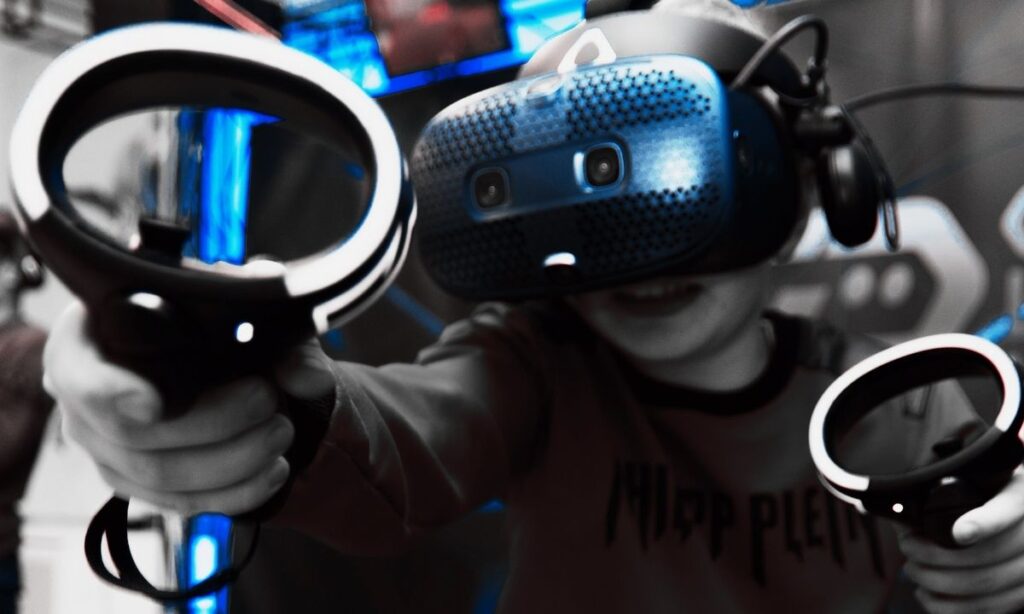
To Millennials, play was leisure; to Gen Z, it became monetised via streaming, gaming, and influencer culture. Generation Alpha will grow up in an economy where play is work not metaphorically, but structurally. Gamified learning, virtual collaboration, and the emerging “metaverse of labour” will collapse the distinction between doing something for enjoyment and doing something for income.
But a society in which everything is play may also be one in which nothing feels playful. The gamification of effort risks turning curiosity into obligation. As philosopher Bernard Stiegler warned, when pleasure becomes programmable, desire itself begins to decay. The real task for Generation Alpha might be to rediscover authentic play — activities that resist monetisation, moments of genuine wonder untracked by data.
The Creative Frontier: Jobs for Generation Alpha
If history repeats itself, every technological revolution eventually births a creative renaissance. For Generation Alpha, creativity will not be confined to the arts but woven through every discipline, engineering, healthcare, education, even governance. Their “creative jobs” may look less like titles and more like hybrids of imagination and technology.
Here are some of the creative careers they might forge or inherit:
- AI Collaborator / Prompt Designer – crafting the questions, emotions, and metaphors that guide generative systems.
- Virtual Experience Architect – designing immersive environments for learning, play, and therapy.
- Ethical Technologist – specialising in aligning machine intelligence with human and ecological values.
- Synthetic Media Curator – blending human storytelling with algorithmically generated content.
- Eco-Restoration Designer – merging biology, architecture, and art to rebuild natural environments.
- Neuro-Interface Artist – using brain-computer connections to turn thought into creation.
- Community Systems Builder – reimagining local economies and digital commons for post-work societies.
- Memory Archivist – preserving digital and physical histories in an era of ephemeral content.
- AI-Enhanced Educator – teaching through co-creation with intelligent systems rather than instruction.
- Consciousness Researcher – exploring how human experience shifts when shared with artificial minds.
Such roles may sound speculative now, but so too did “social media manager” or “UX designer” two decades ago. The creative industries of the future will interpret technology, giving it moral, emotional, and aesthetic shape.
A Post-Work Imagination
Every industrial revolution has promised liberation through efficiency; every one has delivered new forms of dependency. Yet there is reason for cautious optimism. Generation Alpha’s intuitive fluency with AI could allow them to become not its victims but its co-authors. They may build new hybrid economies of creativity, sustainability, and care.
Perhaps work will come to mean something closer to contribution: a fluid exchange between human and machine, self and society. Perhaps the post-work world will not be idle, but full of small, intentional labours.
If the 20th century taught us to define ourselves by what we do, the 21st may teach us to define ourselves by what we choose not to do. Generation Alpha could be the first cohort to grow up believing that work is not the centre of identity, but one expression of it. In that sense, their greatest revolution may be spiritual rather than technological.
The children of the algorithm are watching us closely. They are learning not just how we work, but why. And perhaps, if we are lucky, they will remind us that the future of work is not about machines replacing humans but about humans rediscovering what was never mechanical in the first place.