A post-labor world sounds utopian until we try to live in it.
How many times have you heard AI won’t take your job it will help you excel in your role? Let’s be bold enough to consider a future where the models are so well trained it is time for the human to sit back and relax.
Imagine waking up in a world where you never have to work again. Your needs are met by a fusion of automation and universal basic income. Algorithms manage the economy. Delivery drones bring your groceries. Robots care for the elderly. AI writes the news.
You are free.
But after the initial euphoria, the extended holiday, the endless hobbies, the novels read and unread comes the quiet question: now what?
For centuries, work has been the axis around which adult life revolves. It structures time, dictates status, shapes identity. To retire at 65 is seen as an achievement; to be unemployed at 35 is often a crisis. The prospect of a post-labor society, ushered in not by political revolution but by exponential technology, confronts us not just with economic uncertainty, but with existential ambiguity.
Can we flourish without work?
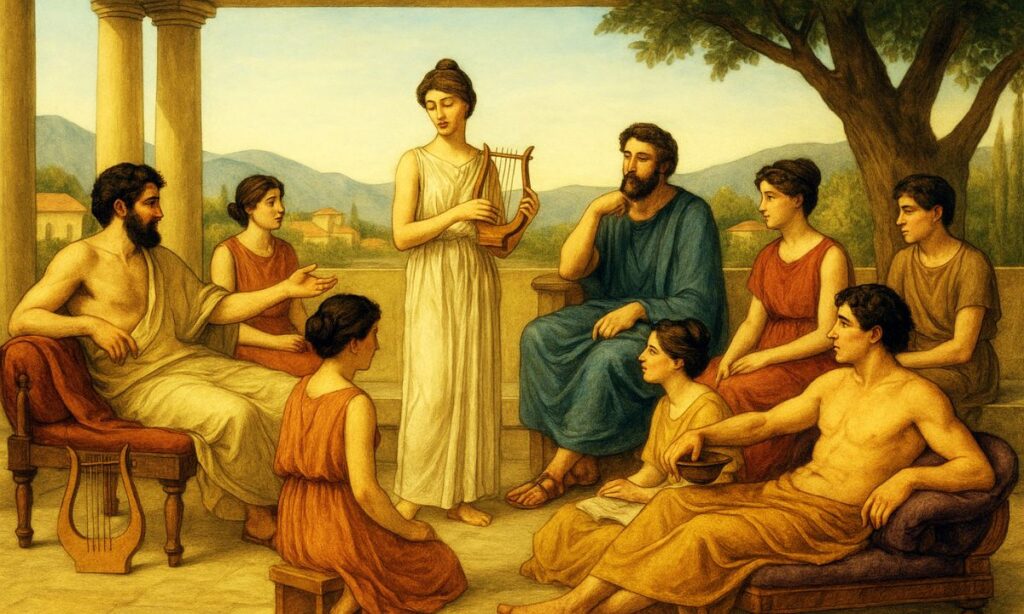
Utopian visions of leisure abound in the Western imagination. Ancient Greeks saw scholē (leisure) as the precondition for philosophy and civic virtue. 20th-century thinkers like Keynes predicted a 15-hour workweek, liberating us for poetry, play, and reflection. But history complicates the fantasy. Leisure has rarely been universal. It’s typically been the domain of elites, sustained by invisible labor elsewhere.
Today, we face a new twist: leisure without luxury. What happens when most people have time, but not purpose? When effort is decoupled from reward?
Early glimpses are already here. In online forums and social media echo chambers, we see the restlessness of dislocated meaning. The rise of hustle culture and influencers reveals a paradox: even in freedom, people yearn to work or at least perform it. And in the backlash, the quiet quitting movement express the fatigue of working without real value.
A post-work society will not succeed on economics alone. It will require an entirely new ethics of purpose. One that does not locate dignity solely in productivity, but in relationships, care, curiosity, creation, and contemplation.
This transition is both just technological and cultural.
For the truth is, we may not be liberated by leisure until we learn to inhabit it. If AI takes our jobs, it may also force us to rediscover ourselves not as workers, but as beings who, in the absence of necessity, must choose how to live.
If you had no work responsibilities what would you want to do? How would you like to spend your time?