
We tend to imagine skill as something measurable lines on a CV, certificates stamped with institutional credibility, perhaps even a portfolio of completed projects. Yet in conversations with hiring managers across industries, a quieter reality emerges. What distinguishes a thriving candidate from one who merely meets the requirements is less visible, less easily certified, and far more human.
These skills are not hidden so much as they are assumed, embedded in the everyday texture of work. They are rarely taught directly; instead, we absorb them through experience, mentorship, or moments of struggle. And because they lie in this ambiguous space between capability and character, many people overlook them entirely.
But these are the skills that shape the modern worker.
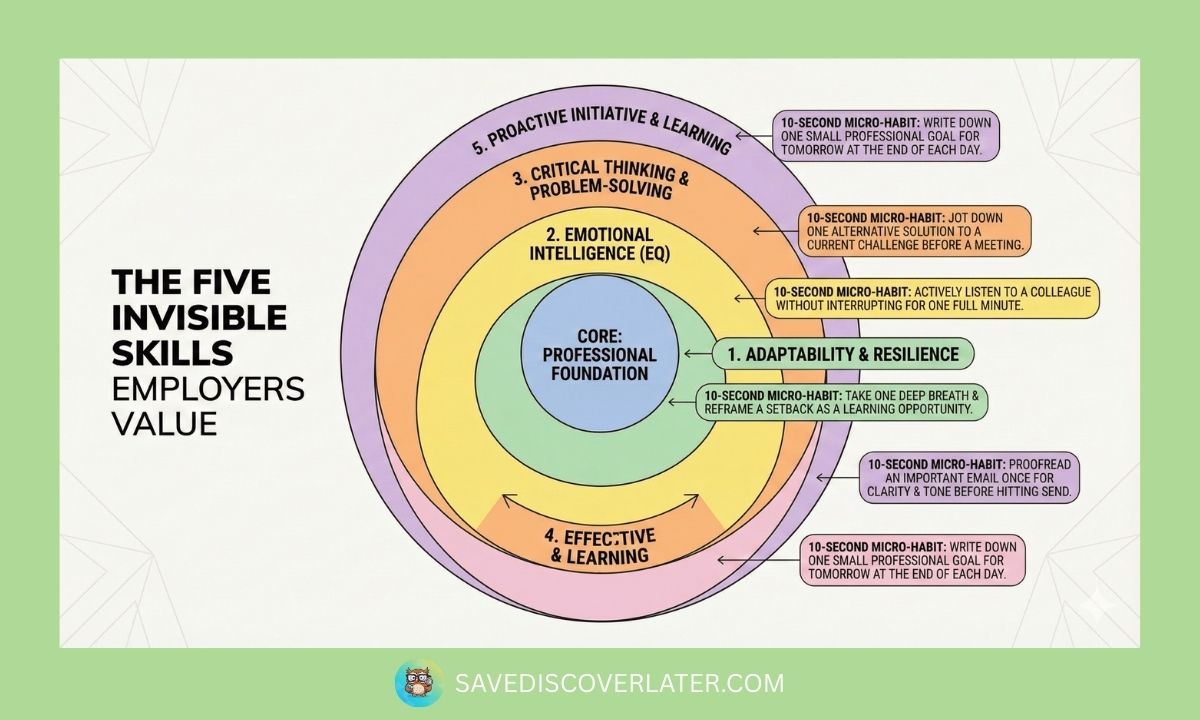
1. Cognitive Flexibility
Cognitive flexibility is the mental agility to hold multiple ideas at once, to update beliefs when confronted with new evidence, and to adapt to shifting contexts. In complex workplaces, where priorities change weekly and certainty is elusive, this ability defines how quickly a person grows.
Build it fast: Practice “perspective switching”: once a day, reinterpret a problem from three different viewpoints. Over time, this gently stretches the mind.
2. Communication Nuance
Most jobs don’t require extraordinary eloquence; they require the ability to convey the right amount of information to the right person at the right moment. Nuance is about calibration knowing when to be brief, when to be thorough, when to persuade, and when to listen.
Build it fast: After each meeting or conversation, write a single sentence: What did the other person need most from me? Over weeks, patterns appear.
3. Self-Direction
Self-direction is not productivity. It is the ability to choose meaningful work without external prompting. As companies become flatter and more autonomous, self-direction becomes essential and scarce.
Build it fast: Create a weekly “self-assigned project”: a small improvement to your process or environment that no one asked for. The discipline of initiating reinforces itself.
4. Resilience With Reflection
Resilience has been cheapened by overuse. True resilience is not stoicism but an ability to metabolize difficulty into knowledge. Reflection is the hinge; without it, hardship becomes wear, not wisdom.
Build it fast: Adopt a five-minute “micro-journal” after setbacks three lines: what happened, how you felt, and what changed because of it.
5. Applied Curiosity
Curiosity, by itself, can be idle. Applied curiosity is different: it is a bias toward exploration that produces action. Employers see it when candidates ask unusually good questions or experiment without instruction.
Build it fast: Each week, learn one tiny skill outside your domain, from basic HTML tags to a negotiation tactic. Curiosity grows through breadth, not intensity.
These five skills share an underlying truth: they are deeply human and cannot be easily outsourced to algorithms. As automation accelerates, the distinctly human aspects of work flexibility, nuance, self-direction, resilience, curiosity only grow more valuable. The future belongs not to those who master a single technical discipline, but to those who can integrate, adapt, and evolve.
Any more skills to add to this list? Don’t forget to Save for Later.